Quick Answer
GLP-1 medications lower blood sugar by boosting insulin release when glucose is high, reducing glucagon (which tells your liver to release sugar), and slowing digestion. They were originally developed for type 2 diabetes and are very effective at controlling glucose levels. GLP-1s alone rarely cause low blood sugar, but risk increases when combined with insulin or sulfonylureas. Regular monitoring is recommended for diabetes patients.
Key Points
- GLP-1 medications were originally developed for type 2 diabetes, not weight loss
- They work by boosting insulin release, reducing glucagon, and slowing digestion
- GLP-1s are "smart" - they only boost insulin when blood sugar is high
- Low blood sugar (hypoglycemia) is rare with GLP-1s alone but can occur with other diabetes medications
- Blood sugar monitoring is essential for diabetes patients on GLP-1s
- GLP-1s do not cure diabetes but help manage blood sugar effectively
Statistics
- GLP-1 medications reduce A1C by 1-1.5% on average in type 2 diabetes patients (American Diabetes Association, 2025)
- Up to 60% of patients achieve target A1C levels with GLP-1 therapy (Journal of Clinical Endocrinology, 2024)
- Hypoglycemia risk is less than 5% with GLP-1 monotherapy (FDA prescribing information, 2025)
- GLP-1s slow gastric emptying by 30-50%, reducing post-meal blood sugar spikes (Diabetes Care, 2024)
Medical Review
This article was reviewed by the GLPSpot editorial team and checked against current prescribing information and cited sources.
GLP-1 and Blood Sugar: How These Medications Affect Glucose
GLP-1 medications were first made for type 2 diabetes. Weight loss was a bonus.
These drugs are very good at controlling blood sugar. Here is how they do it and what you need to know.
How GLP-1s Control Blood Sugar
GLP-1 medications work in three main ways:
1. They boost insulin
When you eat, your blood sugar goes up. GLP-1 medications tell your pancreas to release more insulin. Insulin moves sugar from your blood into your cells.
This only happens when blood sugar is high. GLP-1s are smart. They do not boost insulin when you do not need it.
2. They reduce glucagon
Glucagon is a hormone that tells your liver to release stored sugar. GLP-1 medications reduce glucagon levels.
Less glucagon means less sugar released by your liver. This keeps your blood sugar steady between meals.
3. They slow digestion
GLP-1s slow how fast food leaves your stomach. This means sugar from food enters your blood more slowly.
Slower sugar absorption means fewer blood sugar spikes.
For more on how these medications work, see our what is GLP-1 guide.
What to Expect
If you have type 2 diabetes
Your blood sugar should improve. Many people see lower A1C numbers within weeks of starting GLP-1 medication.
Your doctor may adjust your other diabetes medications. This is important. Taking the same dose of insulin or sulfonylureas with a GLP-1 can cause low blood sugar.
If you do not have diabetes
GLP-1s still affect your blood sugar. But the effect is gentler. Your body already handles insulin well.
You may notice:
- Fewer energy crashes after meals
- Less "hangry" feeling between meals
- More stable energy throughout the day
Low Blood Sugar (Hypoglycemia)
GLP-1s alone rarely cause low blood sugar. But the risk goes up if you take other medications.
Signs of low blood sugar
- Shakiness
- Sweating
- Fast heartbeat
- Dizziness
- Confusion
- Hunger
- Blurry vision
What to do if your blood sugar is low
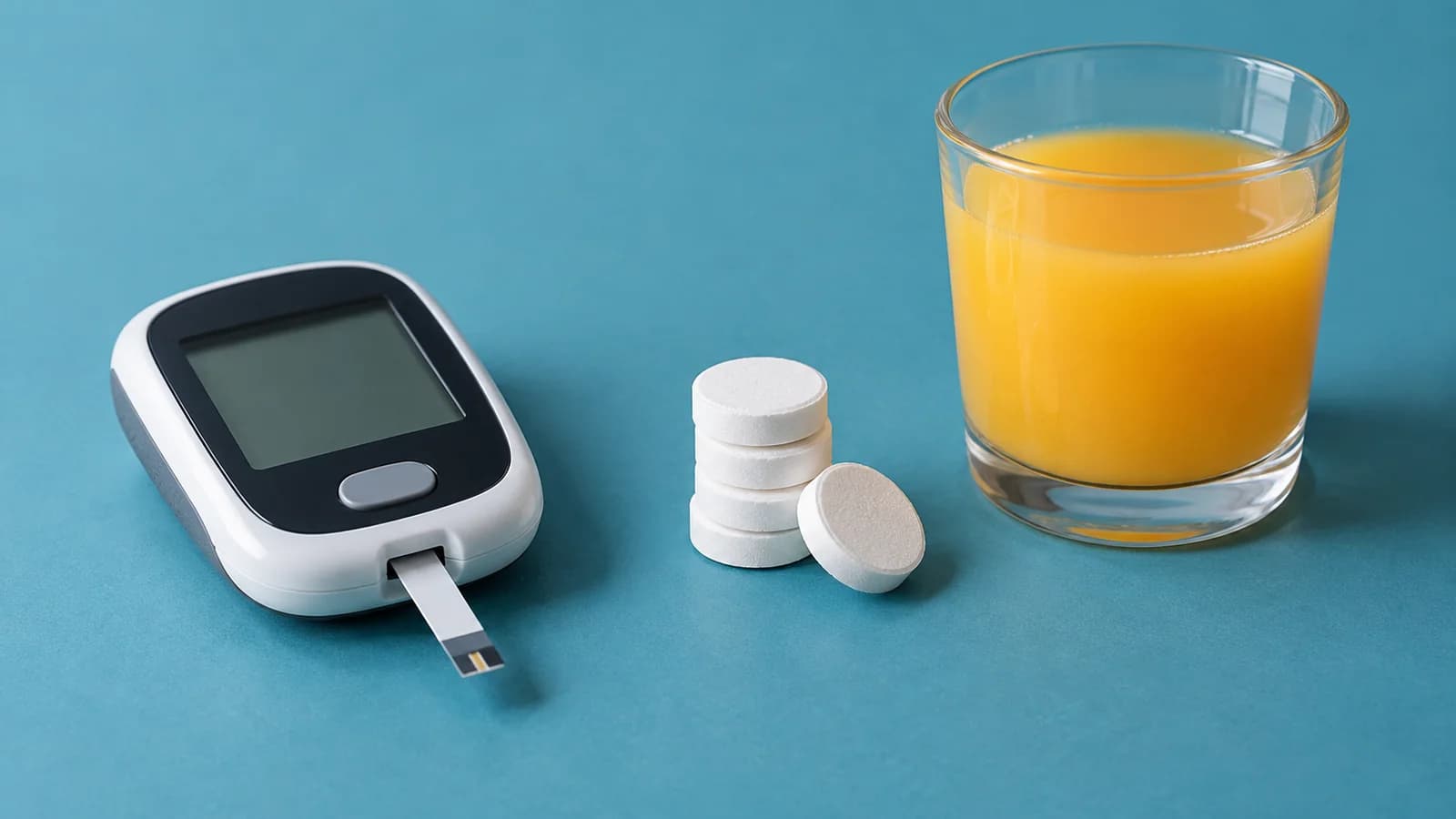
- Eat or drink 15 grams of fast-acting carbs (juice, regular soda, glucose tablets)
- Wait 15 minutes
- Check your blood sugar again
- If still low, repeat step 1
- Once normal, eat a snack with protein and carbs
For more on low blood sugar, see our low blood sugar guide.
Monitoring Your Blood Sugar
If you have diabetes
Check your blood sugar as your doctor recommends. This may include:
- Fasting blood sugar (first thing in the morning)
- Before meals
- 2 hours after meals
- At bedtime
Keep a log. Share it with your doctor at each visit.
If you do not have diabetes
Routine blood sugar monitoring is not usually needed. But you may want to check occasionally to see how your body responds.
A continuous glucose monitor (CGM) can show you how food affects your blood sugar in real time.
Foods That Affect Blood Sugar on GLP-1s
Foods that spike blood sugar
- White bread and white rice
- Sugary drinks and juice
- Candy and desserts
- Processed snacks
Foods that keep blood sugar stable
- Protein (eggs, chicken, fish)
- Healthy fats (avocado, nuts, olive oil)
- Fiber-rich foods (vegetables, whole grains, beans)
- Low-sugar fruits (berries)
Meal timing matters
Eating regular, balanced meals helps keep blood sugar steady. Skipping meals can cause drops and spikes.
For more on eating well with GLP-1s, see our starter guide.
GLP-1s and A1C
A1C is a blood test that shows your average blood sugar over 3 months.
GLP-1 medications typically lower A1C by 1-1.5 percentage points. This is a significant improvement.
Some people see even bigger drops, especially if their starting A1C was high.
When to Call Your Doctor
Contact your doctor if:
Products That Can Help
If you are monitoring blood sugar on GLP-1 medications, these products may help:
-
Continuous glucose monitor — Track your blood sugar trends throughout the day
-
Blood glucose meter — Accurate spot-checking for blood sugar levels
-
Glucose tablets — Quick treatment for low blood sugar episodes
-
Food and symptom journal — Track meals, blood sugar readings, and how you feel
-
Your blood sugar stays too high despite medication
-
You have frequent low blood sugar episodes
-
You feel confused, dizzy, or weak
-
You are unsure about your medication doses
-
You want to adjust your diabetes medications
The Bottom Line
GLP-1 medications are powerful tools for blood sugar control. They work with your body, not against it.
Key takeaways:
- GLP-1s lower blood sugar by boosting insulin and reducing glucagon
- Low blood sugar is rare with GLP-1s alone but possible with other diabetes meds
- Monitor your blood sugar as your doctor recommends
- Eat balanced meals with protein, fiber, and healthy fats
- Know the signs of low blood sugar and how to treat it
Whether you have diabetes or not, understanding how GLP-1s affect your blood sugar helps you stay safe and get the most from your medication.
Medical Disclaimer
This article is for informational purposes only and does not constitute medical advice. Always consult your healthcare provider about blood sugar management, especially if you take GLP-1 medications along with insulin or other diabetes medications. Do not adjust your medication doses without medical supervision. Seek emergency care for severe low blood sugar symptoms including confusion, seizures, or loss of consciousness.
Know someone managing blood sugar on GLP-1s? Share this article with them.