First, check for an emergency
Call 911 if someone has a seizure, passes out, is severely confused, or cannot swallow safely. Do not give food or drink by mouth. A trained helper should use prescribed glucagon if available, following the product instructions, and get emergency medical help. Do not wait to see whether a snack fixes severe symptoms.
For an adult who is awake and able to swallow, a blood glucose reading below 70 mg/dL calls for prompt treatment. The CDC's 15-15 rule means 15 grams of fast-acting carbohydrate, a 15-minute wait, then another glucose check. It does not mean eating protein and assuming the low has resolved.
This general adult guidance does not replace an individual diabetes or emergency plan. Children may need different carbohydrate amounts.
Risk with and without diabetes
GLP-1 medicines help stimulate insulin release in response to glucose. That does not make low blood sugar impossible. The US prescribing information for Zepbound (tirzepatide), a dual GIP/GLP-1 medicine, notes that hypoglycemia has also been reported in adults without type 2 diabetes.
The medication combination matters. Insulin and medicines that stimulate insulin release, including sulfonylureas, increase the risk when taken with these treatments. Your prescriber may need to change those medicines; do not reduce, skip, or increase them on your own.
NIDDK guidance identifies missed meals, inadequate carbohydrate intake, increased activity, illness that limits eating, and alcohol without enough food as contributors to low glucose in people with diabetes. These are useful issues to discuss with your care team, not proof that every dizzy person taking a GLP-1 has hypoglycemia.
If you do not have diabetes and keep getting low readings or unexplained symptoms, arrange medical assessment rather than attributing everything to appetite suppression.
Symptoms are a reason to check, not a diagnosis
Low blood sugar can cause:
- Shakiness, sweating, or a fast heartbeat
- Sudden hunger, weakness, or tiredness
- Dizziness, headache, irritability, or trouble concentrating
- Trouble seeing or speaking clearly
Confusion can progress to an inability to treat yourself. Seizures and loss of consciousness are emergencies.
Some symptoms overlap with fatigue, dehydration, medication side effects, and other conditions. Timing or feeling better after food does not establish the cause. If you have a meter and know how to use it, check your glucose when symptoms occur. Ask your clinician whether you need home monitoring; not everyone taking a GLP-1 for weight management needs to buy a meter or continuous glucose monitor.
If you suspect a low but cannot check, follow your established treatment plan and get medical advice. Do not delay emergency help for severe symptoms while trying to find a meter.
Treating a low reading while awake and able to swallow
The CDC describes this approach for adults:
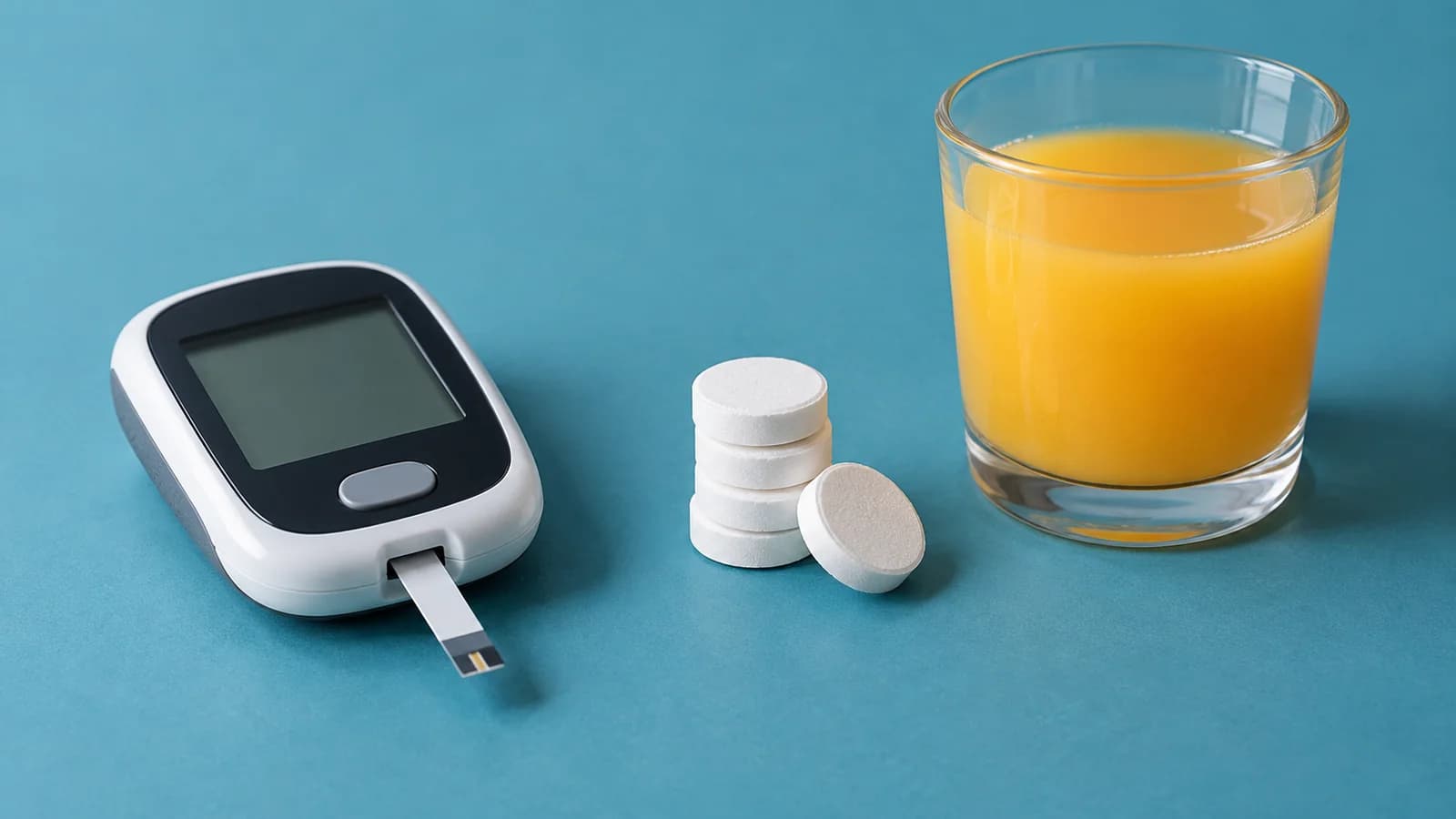
- Take 15 grams of fast-acting carbohydrate. Examples include 4 ounces (half a cup) of juice or regular, non-diet soda; a tablespoon of sugar or honey; or the labeled amount of glucose tablets or gel that supplies 15 grams. Check the label for the amount of candy needed rather than guessing a handful.
- Wait 15 minutes, then check glucose again. If it is still below 70 mg/dL, repeat the treatment and recheck after another 15 minutes. Follow your care team's target if it differs.
- After recovery, eat a balanced snack or meal with carbohydrate and protein. Crackers with cheese or a sandwich are examples. Protein alone is not the first treatment for low glucose.
Fat and fiber slow sugar absorption. Chocolate, nuts, and high-fiber foods are not good first choices for correcting a low quickly. A half banana or an unspecified handful of crackers is not a reliable substitute for a measured fast-acting carbohydrate portion.
If glucose remains low despite treatment, symptoms worsen, or you need someone else's help to manage the episode, seek urgent medical help. A reading below 55 mg/dL is particularly concerning; the CDC warns that you may no longer be able to use the 15-15 rule safely. Severe symptoms need emergency care regardless of the number.
Reducing the chance of another episode
Review meals and medication together
A smaller appetite can make it difficult to maintain regular meals. Tell your care team if nausea or food aversion means you are eating very little. An eating plan needs adequate carbohydrate as well as protein; adding only protein does not correct a mismatch between glucose-lowering medication and food intake.
There is no universal requirement for every GLP-1 user to eat every three or four hours. Your meal timing, glucose targets, and medication regimen should inform your plan. A dietitian can help adapt portions without leaving you underfed.
Plan for physical activity
For people at risk of lows, activity can lower glucose during exercise and afterward. Ask whether you should check before and after activity, carry fast-acting carbohydrate, or adjust meals. Do not change medicine doses based on a generic exercise rule.
Discuss alcohol
Alcohol without enough food can raise the risk of hypoglycemia and make warning signs harder to recognize. Ask whether drinking is safe with your medicines and health conditions. A bedtime snack is not a guarantee against an overnight low.
Keep a usable record
Record the glucose reading, symptoms, time, last meal, activity, alcohol, and medicine doses. Include what you used to treat the low and the repeat reading. This gives your clinician more useful information than a report of feeling a daily "crash."
Keep your fast-acting carbohydrate supply accessible and check its label. If you have prescribed glucagon, make sure someone close to you knows where it is and how to use it. NIDDK recommends teaching family, friends, and coworkers how to respond and call for help.
When to contact your care team
Tell your clinician about recurrent low readings, a low that required help, symptoms you cannot explain, or trouble eating enough. Do not wait until episodes happen more than once a week. Review the plan promptly after any severe event, even if treatment helped.
Bring your medication list, including insulin, sulfonylureas, supplements, and recent dose changes. Ask which medicine combinations increase your risk, whether monitoring or glucagon is appropriate, and what to do during vomiting, illness, fasting, or exercise.
This article provides general information, not a diagnosis or personal treatment plan. Severe confusion, seizures, unconsciousness, or inability to swallow safely require emergency care.