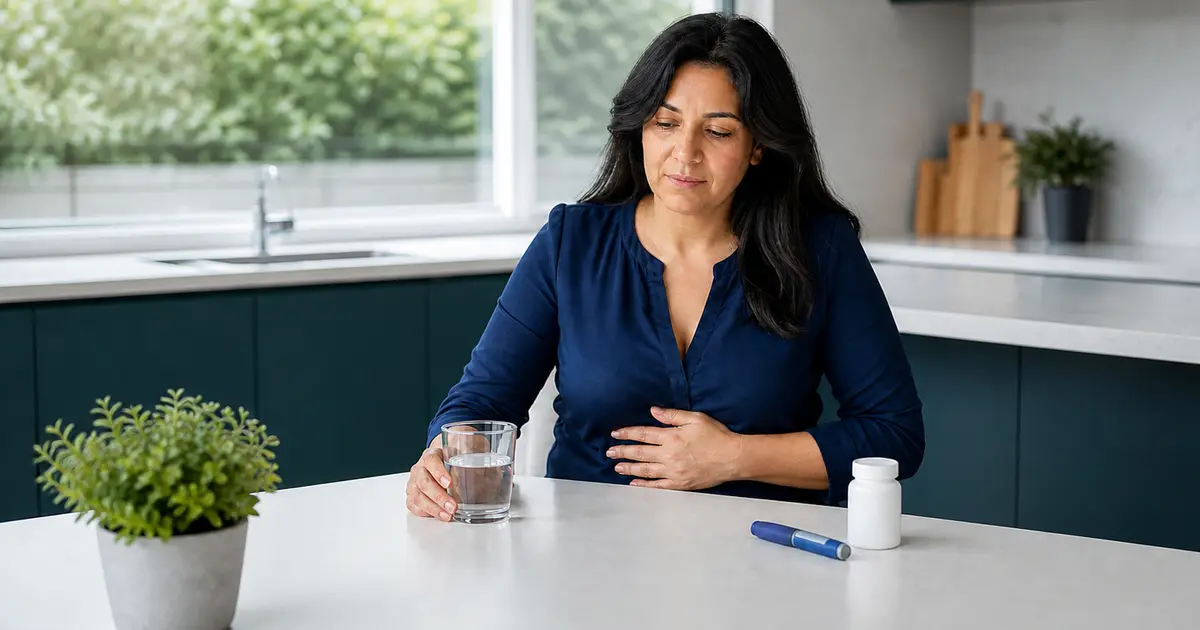
Quick Answer: Headaches on GLP-1 Medications
Headaches on GLP-1 medications are primarily caused by dehydration, low blood sugar, reduced calorie intake, or dose changes. Dehydration is the #1 cause as GLP-1s reduce thirst signals. Headaches typically occur in the first few weeks or after dose increases, resolving within 3-7 days. Prevent headaches by drinking 80-96oz water with a large water bottle daily, eating regular small meals with protein, and maintaining stable blood sugar. Contact your doctor for severe headaches with vision changes, severe abdominal pain, or persistent vomiting.
Key Points
- Dehydration is the #1 cause: GLP-1s reduce thirst signals, leading to inadequate water intake
- Low blood sugar triggers headaches: Reduced calorie intake affects brain fuel supply
- Dose changes often cause headaches: Expect headaches 1-3 days after dose increases
- Typically resolves in 3-7 days: Headaches improve as body adjusts to medication
- Prevention is key: Drink 80-96oz water with a large water bottle daily, eat regular protein-rich meals
- Electrolytes help: Sodium, potassium, and magnesium supplementation can prevent headaches
Statistics: Headaches and GLP-1 Medications
- 20-30%: GLP-1 users report headaches during first month of treatment
- 3-7 days: Average duration of headaches after starting or dose increase
- 80-96oz water with a large water bottle: Daily recommendation to prevent dehydration headaches
- Most common in weeks 1-4: Headache frequency decreases significantly after adjustment period
Medical Review
This article was reviewed by the GLPSpot editorial team and checked against current prescribing information and cited sources.
Headaches on GLP-1s: Why They Happen and What Helps
You started your GLP-1 medication. A few days later: a headache.
Headaches are one of the most common side effects, especially in the first few weeks. They usually go away on their own. But while you're dealing with them, here's what helps.
Why GLP-1s Cause Headaches
There are a few reasons:
1. Dehydration
GLP-1s reduce your appetite and thirst signals. You're probably drinking less water than usual. Dehydration is the #1 cause of headaches on GLP-1s.
2. Low Blood Sugar
GLP-1 medications lower blood sugar. Even in people without diabetes, a drop in blood sugar can trigger a headache.
3. Eating Less
Fewer calories means less fuel for your brain. Headaches are a common signal that your body needs energy.
4. Dose Changes
Headaches often show up in the first few days after a dose increase. They usually fade within a week as your body adjusts.
5. Caffeine Changes
If you're drinking less coffee because your appetite is down, caffeine withdrawal can cause headaches too.
What Helps
Drink Water
This is the first thing to try. Drink 16-20 oz of water and wait 30 minutes. If the headache is from dehydration, it should start to improve.
Add electrolytes if you've been drinking very little all day.
Eat Something
Even a small snack can help if low blood sugar is the cause.
Good options:
- A few crackers with peanut butter
- Half a banana
- A small handful of nuts
- A piece of toast
Rest in a Dark Room
If the headache is bad, lie down in a quiet, dark room. Close your eyes. Give your body a break.
Over-the-Counter Pain Relief
Acetaminophen (Tylenol) or ibuprofen (Advil) can help. Take as directed on the label.
Note: Take with food
Ibuprofen on an empty stomach can cause irritation. If you can only handle a few bites, eat something small first.
Check Your Caffeine
If you've cut back on coffee since starting GLP-1s, the headache might be caffeine withdrawal. A small cup of coffee or tea may help.
How to Prevent Headaches
1. Drink Water Before You're Thirsty
On GLP-1s, your thirst signal is unreliable. Don't wait until you feel thirsty. Aim for 80+ oz of water daily.
2. Eat Regularly
Even with a small appetite, try to eat something every 3-4 hours. Skipping meals is a fast track to a headache.
3. Increase Your Dose Slowly
If headaches show up after a dose increase, they should fade within a week. If they don't, talk to your doctor about whether you should stay at your current dose longer.
4. Track Your Patterns
Keep a simple log: when headaches happen, what you ate that day, how much water you drank. Patterns will show up fast.
When to See Your Doctor
Make an appointment if:
- Headaches happen every day for more than 2 weeks
- Over-the-counter pain meds don't help
- Headaches are getting worse, not better
- You're also experiencing vision changes
Seek immediate care if:
- You have the worst headache of your life
- Headache comes on suddenly and severely (like a "thunderclap")
- Headache is accompanied by confusion, weakness, trouble speaking, or numbness
- Headache follows a head injury
The Bottom Line
Headaches on GLP-1s are common, especially in the first few weeks. They're usually caused by dehydration, low blood sugar, or eating less.
Your action items:
- Drink 80+ oz of water daily
- Eat something every 3-4 hours (even if it's small)
- Try water + a snack before reaching for pain meds
- Track your headache patterns
- Talk to your doctor if headaches don't improve after 2 weeks
Most headaches on GLP-1s fade as your body adjusts. Stay hydrated, eat regularly, and give it time.
This article is for informational purposes only and does not replace medical advice. Always talk to your healthcare provider about persistent or severe headaches.
Found this helpful? Share it with someone starting GLP-1s who's dealing with headaches.