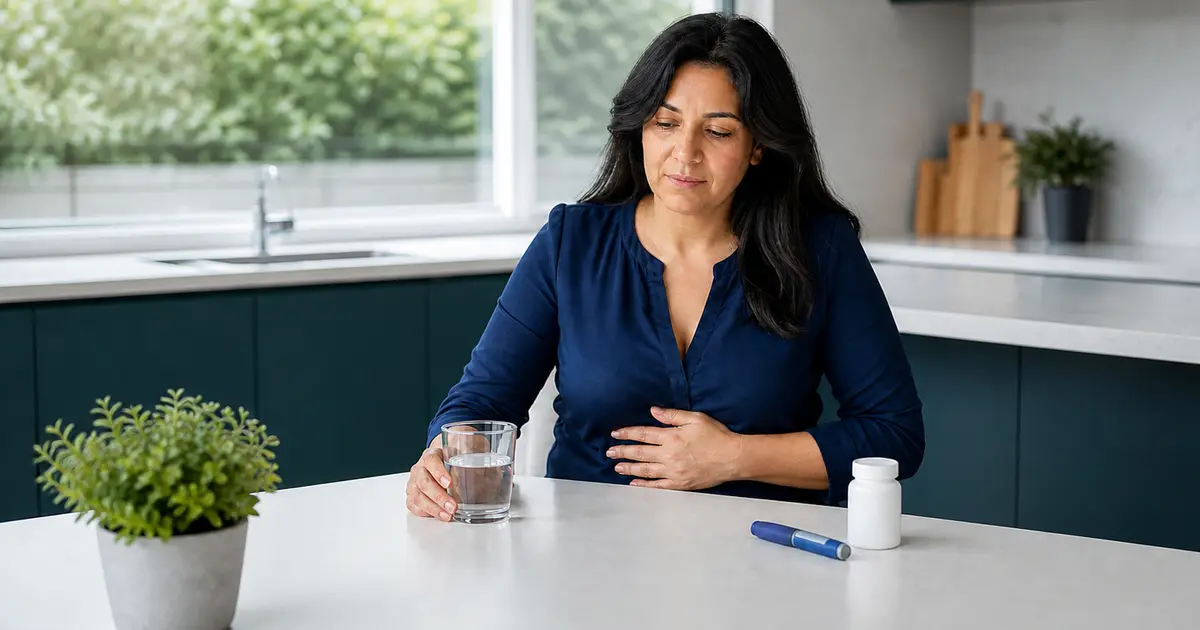
You're losing weight on GLP-1s. People are noticing. And then you see it in the mirror: your face looks different. Fuller cheeks are gone. You look more tired than you feel.
Some people call it "Ozempic face." It's a real thing. But it's not what the headlines make it sound like.
Helpful Products for Ozempic Face
Dealing with facial changes from rapid weight loss? These products can help support your skin through the transition:
- Collagen peptide powder — Supports skin elasticity from the inside out. A collagen peptide powder gives your body the building blocks it needs during rapid weight loss.
- Hyaluronic acid serum — Hydrates and plumps skin to reduce the appearance of hollowness. A hyaluronic acid serum helps skin look more refreshed even as facial fat shifts.
- Retinol face cream — Improves skin texture and reduces fine lines over time. A retinol face cream supports collagen production while your skin adjusts.
- Facial roller and gua sha set — Promotes circulation and lymphatic drainage for a less puffy, more toned look. A facial roller and gua sha set is an easy addition to your daily routine.
GLPSpot may earn from qualifying purchases.
What "Ozempic Face" Actually Is
"Ozempic face" is not a medical condition. It's a nickname for facial fat loss that happens when you lose weight quickly. GLP-1 medications don't target your face specifically. When you lose weight, you lose fat from all over your body — including your face.
The face is often one of the first places people notice weight loss because it's so visible.
Why It Happens
Fast weight loss: GLP-1s are effective. Losing 1-2+ pounds per week is common. Fast weight loss = less time for your skin to adjust.
Facial fat loss is normal: When you lose weight, you lose fat everywhere. Your face has fat pads that give it volume. When those shrink, your face changes shape.
Age matters: If you're over 40, your skin has less collagen and elasticity. Facial fat loss shows up more. Skin elasticity declines about 20% per decade after age 30.
How much you lose: Losing 10% or more of your body weight usually means noticeable facial changes.
Dehydration: GLP-1 medications can cause mild dehydration. Dehydrated skin looks more wrinkled and hollow.
Muscle loss: If weight loss includes muscle (common without enough protein), facial muscles may also shrink.
What It Looks Like
- Thinner cheeks
- More visible lines or wrinkles
- Hollowed temples or under-eye area
- Sagging skin around jawline
- Sunken appearance
- Overall "tired" or "gaunt" look
- More visible jowls
Not everyone gets all of these. Some people notice only one or two changes. Others notice more.
Who Is More Likely to Experience It
- People over 40 (less skin elasticity)
- People who lose weight very quickly
- People who don't eat enough protein
- People who are dehydrated
- People who already have thin faces
- Smokers (damages skin elasticity)
What Helps
1. Slow Down Your Weight Loss
If you're losing more than 2 pounds per week consistently, talk to your doctor. A slower pace gives your skin more time to adjust. Aim for 1-2 pounds per week.
2. Stay Hydrated
Dehydrated skin looks more sunken and tired. Drink 80+ oz of water daily. More if you exercise or live in a hot climate.
3. Eat Enough Protein
Protein supports collagen production. If you're eating very little, your skin loses the building blocks it needs. Aim for 60-80g protein daily minimum. See our protein goal guide for how much you need.
4. Skincare Basics
A good routine won't replace lost fat, but it helps skin look its best:
- Daily moisturizer (hyaluronic acid or ceramides)
- Sunscreen (SPF 30+ daily — sun damage makes facial aging worse)
- Retinol at night (helps with fine lines over time)
- Gentle cleanser (don't strip your skin)
- Vitamin C serum in the morning (brightens and protects)
5. Facial Exercises
Some evidence suggests facial exercises can improve muscle tone in the face. The effect is modest, but it's free and safe.
6. Dermal Fillers
If facial fat loss is significant and bothering you, dermal fillers are an option. They restore volume temporarily (6-18 months depending on the product).
Things to know:
- Fillers are expensive ($600-$2,000+ per session)
- Results are temporary
- You need a qualified, experienced injector
- Don't get fillers until your weight is stable
7. Other Treatment Options
- Fat grafting: Fat is taken from another area and injected into face. More permanent but more expensive ($3,000-$10,000) with 1-2 week recovery.
- Skin tightening: Radiofrequency or ultrasound procedures that tighten skin.
- Microneedling: Stimulates collagen production.
These treatments have costs and risks. Talk to a qualified professional before deciding.
8. Give It Time
For many people, facial appearance improves as:
- Skin adjusts to new shape
- Weight stabilizes
- Hydration improves
- Facial muscles adapt
What Doesn't Help
"Face yoga" miracle claims: Some benefit from facial exercises, but they won't restore lost fat.
Expensive creams that promise to "plump" your face: Most do nothing beyond basic moisturizing.
Collagen drinks: Evidence is mixed. If they work, the effect is small.
Waiting for it to "go away": Facial fat loss from weight loss is permanent unless you gain the weight back or get fillers.
Comparison to Other Weight Loss
| Method | Facial Volume Loss | Speed |
|---|---|---|
| GLP-1 medications | Common | Fast |
| Bariatric surgery | Very common | Very fast |
| Diet and exercise | Less common | Slower |
| GLP-1 + lifestyle | Moderate | Moderate |
The Mental Side
Your face is the first thing people see. Changes there can feel more personal than changes anywhere else on your body.
It's okay to feel weird about it. But try to keep it in perspective:
- Your face changed because you lost weight — that's progress
- Most people notice your overall change, not specific areas
- Your health has improved — that matters more
- If it really bothers you, there are options
If facial changes are affecting your mood or self-image, talk to someone. Our mental health and body image guide has resources.
Products That Can Help
Concerned about facial changes on GLP-1s? These products may help:
- Collagen peptide powder — Support skin elasticity during rapid weight loss
- Hyaluronic acid serum — Hydrate and plump skin from the outside
- Retinol face cream — Improve skin texture and reduce fine lines
- Facial roller and gua sha set — Promote circulation and lymphatic drainage
When to See a Professional
Consider seeing a dermatologist or plastic surgeon if:
- You are bothered by facial changes
- You want to discuss treatment options
- You have significant sagging or loose skin
- You want to rule out other causes
Do Not Let Fear Stop You
Ozempic face sounds scary. But the health benefits of weight loss are real. Lower blood sugar. Better heart health. Less joint pain. Do not let fear of facial changes stop you from treating your health. There are ways to manage the appearance if it happens.
The Bottom Line
"Ozempic face" is just facial fat loss from rapid weight loss. It's real, it's normal, and it's not unique to GLP-1s — it happens with any fast weight loss.
Your action items:
- Don't panic — this is a normal part of weight loss
- Stay hydrated and eat enough protein
- Use a basic skincare routine (moisturizer, sunscreen, retinol)
- If losing weight too fast, talk to your doctor about adjusting your dose
- If it really bothers you, consider fillers once your weight is stable
- Focus on the bigger picture: your health has improved
Your face changed because your body changed. That's not a bad thing. Deal with what you can, accept what you can't, and don't let it overshadow your progress.
This article is for informational purposes only and does not replace medical advice. Always talk to your healthcare provider about weight loss and cosmetic treatment options.