The Quick Answer
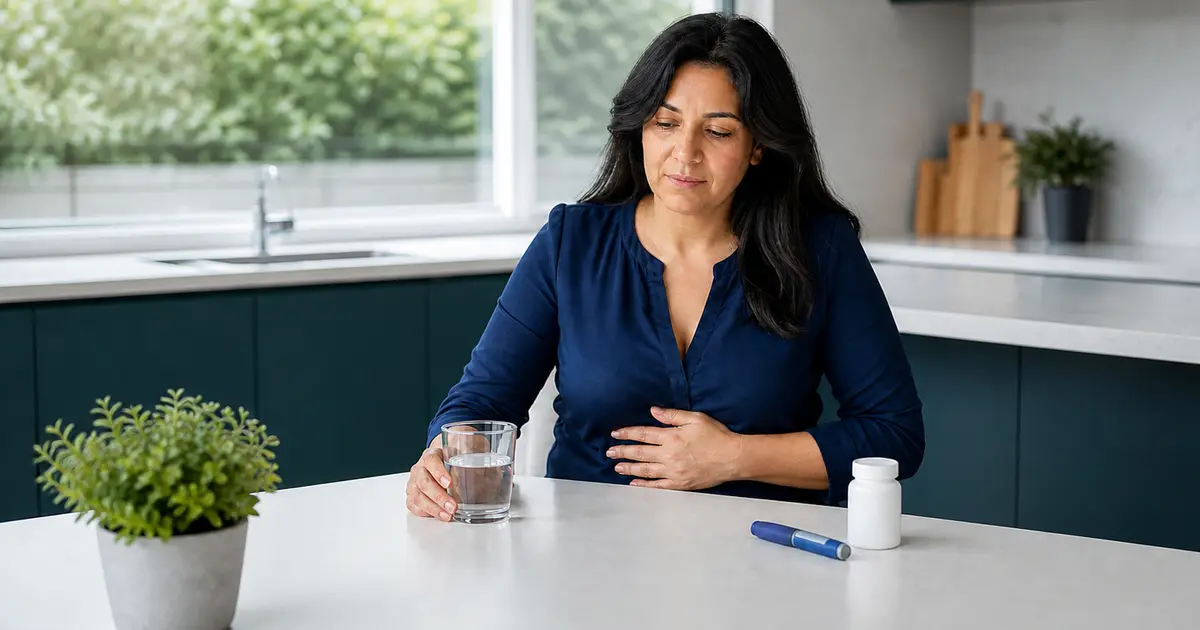
Nausea and constipation are the two most common GLP-1 side effects. Most people can manage them with OTC strategies: small meals, hydration, ginger, magnesium, and Miralax. For severe nausea that does not improve, your doctor may prescribe ondansetron (Zofran). The key is knowing what is normal, what helps, and when to get medical help.
Why Nausea and Constipation Happen
GLP-1 medications do two things that cause these side effects:
- Slow your stomach emptying. Food sits in your stomach longer. This makes you feel full (which helps with weight loss) but also causes nausea, especially after eating.
- Slow your digestion overall. Everything moves more slowly through your system, including your bowels. Less food volume plus slower digestion equals constipation.
These are not signs something is wrong. They are signs the medication is working. But they still feel awful if you do not manage them.
Nausea: What Helps
Start Here (No Medication Needed)
These work for most people with mild to moderate nausea:
- Eat small portions. Half your normal amount or less. Your stomach empties slowly — overloading it makes nausea worse.
- Choose bland foods. Crackers, toast, bananas, rice, applesauce, plain yogurt. Skip fatty, greasy, spicy, and sweet foods.
- Eat cold or room-temperature food. Hot foods smell stronger and trigger nausea for some people.
- Sip ginger tea or chew ginger. Ginger has real evidence for mild nausea relief. Ginger chews are easy to keep in your bag.
- Try peppermint tea. Skip this if you have acid reflux — peppermint can make it worse.
- Do not lie flat after eating. Sit up or recline slightly for at least 30 minutes.
- Stay hydrated. Drink 80-96oz water daily. Sip between meals, not during them. Add electrolyte powder to at least one glass.
For a full food guide, see Best Foods for GLP-1 Nausea.
Next Step: Talk to Your Doctor About Ondansetron
If OTC strategies are not enough and your nausea is severe — meaning you cannot eat or keep fluids down — your doctor may prescribe ondansetron (Zofran).
What ondansetron does: It blocks serotonin receptors in your gut and brain that trigger the nausea reflex. It was originally developed for chemotherapy-induced nausea but is now commonly prescribed for other types of severe nausea.
What you need to know:
- It requires a prescription. You cannot get it over the counter.
- It comes as tablets, orally disintegrating tablets (ODT), or liquid.
- The ODT form dissolves on your tongue — helpful if you cannot keep pills down.
- Common side effects: headache, constipation (yes, ondansetron can make constipation worse), and dizziness.
- It can prolong the QT interval in some people. Tell your doctor if you have heart rhythm issues or take other medications that affect QT.
Important safety note: Ondansetron can cause constipation on its own. Since GLP-1 medications already cause constipation, taking ondansetron may make that side effect worse. This is not a reason to avoid it if you need it — just something to be aware of so you can stay ahead of constipation while using it.
What Not to Do
- Do not take someone else's ondansetron. It is a prescription medication for a reason.
- Do not keep suffering without calling your doctor. Severe nausea that prevents eating and drinking can lead to dehydration.
- Do not stop your GLP-1 without talking to your doctor. Most nausea improves over time. Stopping early means you never get past the hard part.
For more on what triggers nausea and how to manage it, see Nausea Triggers and Management.
Constipation: What Helps
Start Here (Prevention and Mild Cases)
These are your first line of defense. Start them the same day you start your GLP-1:
- Drink 80-96oz water daily. This is non-negotiable. Fiber without enough water makes constipation worse, not better.
- Take magnesium glycinate or citrate (200-400mg) at bedtime. Magnesium draws water into your stool and relaxes intestinal muscles. Start with 200mg and increase to 400mg if needed. Magnesium glycinate is gentle on the stomach; magnesium citrate works better if constipation is your main issue.
- Eat 25-35g of fiber daily. Build up slowly — jumping from 10g to 30g overnight causes gas and bloating. Good sources: psyllium husk, chia seeds, vegetables, beans.
- Walk 15-20 minutes after a meal. Physical movement stimulates your bowels.
- Try warm liquids in the morning. Warm water with lemon or herbal tea can stimulate a bowel movement.
Next Step: Miralax (PEG 3350)
If prevention is not enough and you have not had a bowel movement in 2-3 days, add Miralax (PEG 3350).
How it works: Miralax is an osmotic laxative. It draws water into your stool to soften it and make it easier to pass. It is not a stimulant laxative, which means it is not habit-forming and does not cause cramping for most people.
How to take it:
- Mix the full dose (17g) into 4-8oz of any beverage. It dissolves best in warm liquids. Miralax is available at any pharmacy.
- Take it once daily. It usually works in 1-3 days.
- Keep taking it daily until you have a bowel movement.
- Drink your full 80-96oz of water while taking it.
Is Miralax safe long-term on GLP-1? Miralax is generally considered safe for ongoing use when taken as directed. It is one of the most commonly recommended laxatives for GLP-1 patients. But if you find yourself needing it every day for more than a few weeks, tell your doctor. That level of constipation may need a different approach.
For a comparison of fiber supplements, see Colon Broom vs Metamucil for GLP-1 Constipation.
What Not to Do
- Do not use stimulant laxatives daily. Products like senna or bisacodyl stimulate your bowel muscles. Occasional use is fine, but daily use can cause dependence and make constipation worse over time.
- Do not ignore constipation for more than 4 days. Severe constipation can lead to impaction, which requires medical treatment.
- Do not increase fiber without increasing water. More fiber without enough water creates a brick in your colon. Always pair fiber with hydration.
For a full constipation guide, see Constipation Solutions for GLP-1 Users.
The Quick-Reference Tables
Nausea Management Ladder
| Step | What to Try | When |
|---|---|---|
| 1 | Small bland meals, ginger, hydration | First sign of nausea |
| 2 | Cold foods, peppermint tea, eat less per meal | Nausea not improving after a few days |
| 3 | Call doctor — ask about ondansetron | Cannot eat or drink, nausea is severe |
Constipation Management Ladder
| Step | What to Try | When |
|---|---|---|
| 1 | 80-96oz water + magnesium 200-400mg daily | Day 1 of GLP-1 treatment |
| 2 | Add fiber (25-35g/day), walk after meals | Prevention not enough |
| 3 | Add Miralax (PEG 3350) | No bowel movement in 2-3 days |
| 4 | Call doctor | No bowel movement in 4+ days, severe pain |
Red Flags: When to Call Your Doctor Now
Some symptoms are not normal side effects. Get medical help if you have:
- Severe abdominal pain — not cramping or discomfort, but sharp or worsening pain. This could signal pancreatitis, which is a medical emergency.
- Cannot keep fluids down for 24+ hours — dehydration risk
- Vomiting blood or dark material — needs immediate evaluation
- No bowel movement for 4+ days despite Miralax and hydration — may indicate impaction
- Signs of dehydration — dark urine, dizziness when standing, rapid heartbeat, dry mouth
- Nausea that gets worse over time instead of better — may need dose adjustment
Your Side-Effect Toolkit
Keep these on hand when starting or increasing a GLP-1 dose:
- Ginger chews or ginger tea — for nausea. Ginger chews are easy to keep on hand
- Electrolyte powder — for hydration. Zero-sugar electrolyte packets mix into your water
- Magnesium glycinate or citrate — for constipation prevention. Magnesium glycinate is what readers often pick
- Miralax (PEG 3350) — for constipation backup. Miralax is available at any pharmacy
- Large water bottle (80oz+) — to track intake. A marked water bottle helps you hit your daily goal
- Saltine crackers — for when nausea makes eating feel impossible
- Thermometer — fever with abdominal pain needs urgent evaluation
For a full first-week protocol, see GLP-1 First Week: Nausea, Constipation, and What to Do.
The Bottom Line
Nausea and constipation are normal on GLP-1 medications. They are manageable. Start with the basics — small meals, hydration, ginger, magnesium, and Miralax. If nausea is severe, ask your doctor about ondansetron. Do not suffer through severe symptoms without calling your doctor. Most side effects improve within 4-8 weeks as your body adjusts.
Related guides:
- Nausea Triggers and Management
- Constipation Solutions for GLP-1 Users
- Best Foods for GLP-1 Nausea
- GLP-1 First Week Protocol
- GLP-1 Side Effects Guide
- GLP-1 Pancreatitis Warning Signs
This article is for informational purposes only and does not constitute medical advice. Always consult your healthcare provider before starting or stopping any medication, including OTC laxatives and anti-nausea treatments. Individual experiences vary; this guide reflects common patterns but may not apply to everyone.