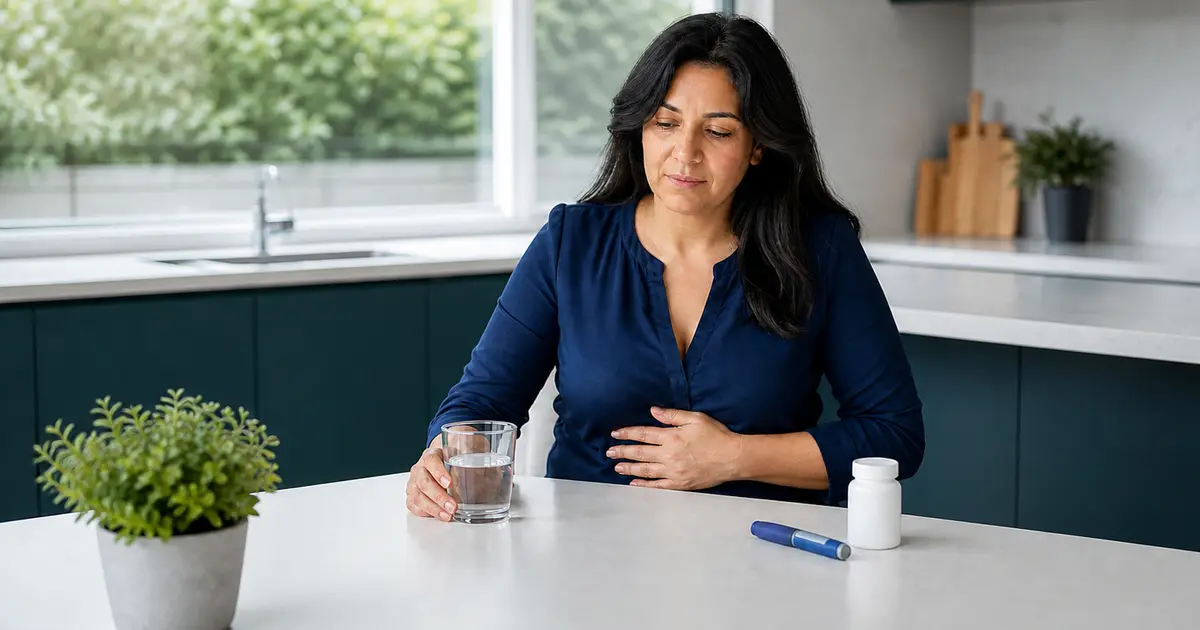
The first week on a GLP-1 medication is the hardest part. Nausea shows up. Constipation starts. You might feel like you made a mistake. You probably did not. These side effects are normal, and they are manageable if you know what to do. This article is your day-by-day guide to getting through week one.
Why Week One Is Rough
GLP-1 medications do three things right away:
- Slow your stomach emptying — Food sits in your stomach longer. This causes nausea and fullness.
- Reduce your appetite — You eat less, which means less food volume pushing through your system. This causes constipation.
- Change your digestion speed — Everything moves slower, including your bowels.
Your body has never dealt with this before. It takes time to adjust. Most people feel much better by week 2-4. The key is managing days 1-7 well so you do not quit before things improve.
Helpful Products for Your First Week
Your first week on a GLP-1 is usually the hardest. These can help:
- Ginger chews — Fast nausea relief you can carry anywhere. Ginger chews are easy on your stomach and actually work.
- Liquid I.V. packets — Dehydration makes everything worse. Liquid I.V. hydration packets help you hold onto water when you can barely sip.
- Probiotic supplement — Keeps your gut balanced during the adjustment. Physician's Choice probiotic targets bloating and irregularity.
- Electrolyte mix (LMNT) — Zero sugar, high sodium for when you need real hydration. LMNT variety pack dissolves fast and tastes clean.
GLPSpot may earn from qualifying purchases.
Before You Start: The Prep Checklist
Do these things the day before your first dose:
- Buy ginger chews or ginger tea
- Get electrolyte powder or drinks
- Stock bland foods: saltines, bananas, white rice, toast, applesauce, broth
- Fill a large water bottle (80oz+)
- Get magnesium glycinate or citrate (200-400mg capsules)
- Clear your schedule for days 1-3 if possible (do not plan big meals or events)
- Tell someone you live with that you are starting the medication
Days 1-2: The Onset
What to expect
Nausea may start within hours of your first dose. It is usually mild — a queasy feeling, not vomiting. Constipation might not be noticeable yet because your digestion was normal before starting.
What to do
Hydration:
- Drink 16oz water within 30 minutes of waking
- Sip 8-12oz between each small meal
- Target 80oz water by bedtime
- Add electrolytes to at least one glass
Eating:
- Eat very small portions (half your normal amount or less)
- Choose bland foods only: toast, crackers, banana, rice
- Avoid all fatty, greasy, or fried food
- Avoid spicy food, strong-smelling food, and large meals
- Eat 4-6 times instead of 2-3 times
Nausea management:
- Sip ginger tea when nausea hits
- Try 1-2 ginger chews
- Do not lie flat after eating (sit up or recline slightly)
- Fresh air helps — step outside or open a window
Constipation prevention:
- Start magnesium tonight (200mg glycinate or citrate)
- Drink your full 80oz water
- Take a 10-15 minute walk after your last meal
Day 1 meal example
| Time | Food |
|---|---|
| Morning | 2-3 saltine crackers, 8oz water |
| Mid-morning | Half a banana, ginger tea |
| Lunch | Half cup white rice, small portion of plain scrambled egg |
| Afternoon | 4oz applesauce, electrolyte water |
| Dinner | Small bowl of broth with a few noodles, half slice toast |
Days 3-4: The Peak
What to expect
This is when nausea is usually worst. You may feel full after just a few bites. Constipation is likely becoming noticeable. This is the hardest stretch. It gets better from here.
What to do
If nausea is moderate:
- Keep portions very small
- Try cold or room-temperature foods (often easier to tolerate than hot foods)
- Sip peppermint tea if ginger is not helping (skip if you have acid reflux)
- Rest with your upper body elevated after eating
- Do not force yourself to finish a meal. Stop at the first sign of fullness.
If nausea is severe:
- Call your doctor. They may prescribe ondansetron (Zofran) or another anti-nausea medication.
- Focus on staying hydrated even if you cannot eat. Sip electrolyte water constantly.
- Try bone broth for calories and protein when solid food is too much.
For constipation:
- Increase magnesium to 400mg if you tolerated 200mg well
- Add a 15-20 minute walk after one meal
- Try warm liquids in the morning (warm water with lemon, herbal tea) to stimulate digestion
- If no bowel movement by day 4, add one dose of Miralax (PEG 3350) as directed on the label
The most important rule for days 3-4
Do not eat through the nausea. If your stomach says stop, stop. An empty stomach can make nausea worse for some people, but forcing food into a nauseous stomach makes it worse too. The balance: eat tiny amounts of very bland food, spaced out, and prioritize hydration above all else.
Days 5-6: The Turn
What to expect
For most people, nausea starts to ease by day 5. You may still feel full quickly, but the queasy edge is softening. Constipation may still be an issue but should be manageable with your hydration and magnesium routine.
What to do
Gradually expand your food options:
- Add plain yogurt or cottage cheese
- Try a small portion of lean protein (chicken, turkey, fish — baked or grilled, not fried)
- Add cooked vegetables (zucchini, spinach, carrots — not raw)
- Keep portions small even if you feel better
Keep your routine going:
- 80+ oz water daily
- Magnesium at bedtime
- Electrolytes at least once
- Walk after one meal
Start tracking:
- Write down what you eat and how you feel after. This helps you identify your personal triggers.
- Note which foods cause nausea and which are safe.
- Track your bowel movements (yes, really — it matters for constipation management).
Day 7: The Check-In
What to expect
By day 7, most people feel significantly better than they did on day 3. Nausea may still come and go, but it is usually milder and shorter. Constipation should be managed with your routine.
Your week-one self-assessment
Answer these questions:
- Can you eat small meals without nausea? (If yes, you are on track)
- Are you drinking 80+ oz water daily? (If yes, keep going)
- Have you had a bowel movement in the last 2-3 days? (If no, move to the constipation protocol below)
- Is your nausea getting better, staying the same, or getting worse? (If worse, call your doctor)
- Can you keep fluids down? (If no, call your doctor today)
If things are going well
Keep your routine. Gradually add more food variety. Continue small portions. Stay hydrated. You are past the hardest part.
If nausea is still bad
- Talk to your doctor about anti-nausea medication
- Ask if a slower dose titration schedule makes sense
- Review your food diary for hidden triggers
- Make sure you are not accidentally eating fatty foods, large portions, or eating too fast
The Nausea Quick-Reference
| Trigger | What Happens | What to Do |
|---|---|---|
| Large portions | Stomach overfills → nausea | Eat half your normal amount |
| Fatty or greasy food | Fat digests slowly → sits in stomach longer | Choose lean proteins, avoid fried food |
| Eating too fast | Food hits stomach faster than it can process | Take 3 bites, put fork down, count to 20 |
| Dehydration | Low water + slow digestion = worse nausea | 80oz+ water daily, electrolytes |
| Hot foods | Temperature triggers nausea for some | Try cold or room-temperature foods |
| Strong smells | GLP-1 changes smell sensitivity | Avoid cooking smells, eat pre-made cold foods |
The Constipation Quick-Reference
| Tool | How It Works | When to Use |
|---|---|---|
| Water (80-96oz/day) | Fiber needs water to move stool | Every day, non-negotiable |
| Magnesium (200-400mg) | Relaxes muscles, draws water into stool | Nightly, starting day 1 |
| Walking (15-20 min) | Muscle movement stimulates bowels | After one meal daily |
| Fiber (25-35g/day) | Adds bulk, softens stool | Build up slowly over the first week |
| Miralax (PEG 3350) | Draws water into stool, gentle | If no bowel movement by day 4 |
| Call doctor | — | If no bowel movement for 4+ days, severe pain, or vomiting |
Red Flags: When to Call Your Doctor Now
These are not normal first-week side effects. Get medical help if you experience:
- Cannot keep any fluids down for 24+ hours — Dehydration risk
- Severe abdominal pain (not just discomfort or cramping) — Could indicate pancreatitis or bowel issue
- Vomiting blood or dark material — Needs immediate evaluation
- No bowel movement for 4+ days despite hydration and magnesium — May need prescription laxative
- Rapid heartbeat, dizziness, or fainting — Possible dehydration or other issue
- Signs of allergic reaction (swelling, difficulty breathing, hives) — Emergency
What to Tell Your Doctor at Your Week-One Follow-Up
If you have a follow-up call or visit after week one, tell your doctor:
- How many days you had nausea and how bad it was (mild, moderate, severe)
- Whether you could eat and drink normally
- How many bowel movements you had during the week
- What foods triggered nausea
- Whether you needed Miralax or anti-nausea medication
- Whether side effects are getting better or staying the same
This information helps your doctor decide if your dose is right or if the titration schedule should be adjusted.
Your First-Week Survival Kit
Keep these items accessible for the entire first week:
- Ginger chews or ginger tea — for nausea
- Electrolyte powder — for hydration
- Magnesium glycinate or citrate — for constipation prevention
- Saltine crackers — for when nausea makes eating feel impossible
- Bananas — easy to eat, potassium for electrolytes
- Broth (chicken or vegetable) — calories and hydration when you cannot eat solid food
- Large water bottle — track your intake
- Miralax (PEG 3350) — for constipation backup if magnesium is not enough
The Bottom Line
The first week on a GLP-1 is uncomfortable for most people. That is normal. Nausea peaks around days 2-4 and eases by day 5-7. Constipation can start early but is manageable with water, magnesium, and movement. The key is: small portions, bland foods, constant hydration, and do not try to push through severe symptoms without calling your doctor. If you follow this protocol, you will likely feel much better by the end of week two. Stick with it.
For more detailed guidance on specific side effects, see:
- Nausea Triggers and Management — deep dive on what causes nausea and how to stop it
- Constipation Solutions — full constipation prevention and treatment guide
- Best Foods for GLP-1 Nausea — what to eat when your stomach says no
- GLP-1 Side Effects Guide — overview of all common side effects
This article is for informational purposes only and does not constitute medical advice. Always consult your healthcare provider before starting any medication or if you experience severe side effects. Individual experiences vary; this protocol reflects common patterns but may not apply to everyone.